
Cultural Experiences in Sri Lanka
Explore 2,500 years of royal Sri Lankan history, ancient stupas, and tooth temple rituals.
Top Highlights of Cultural Experiences
- Sigiriya rock climb
- Kandy cultural dance
- Anuradhapura stupas
Sri Lanka’s Cultural Triangle: 2,500 Years of Royal History
Sri Lanka’s “Cultural Triangle” — Anuradhapura, Polonnaruwa, and Sigiriya — holds some of South Asia’s best-preserved ancient capitals, alongside Kandy’s still-living tooth relic tradition, giving visitors a rare mix of ruins you explore and rituals still practiced today.
Quick Facts
- Core sites: Anuradhapura, Polonnaruwa, Sigiriya, Kandy’s Temple of the Sacred Tooth Relic
- Best time to visit: Year-round; early mornings avoid heat at open-air ruin sites
- Time needed: 4–5 days to cover the Cultural Triangle plus Kandy properly
- Dress code: Shoulders and knees covered, shoes removed at temple entrances
Top Highlights
- Venerate the sacred Tooth Relic at Sri Dalada Maligawa, Kandy — the most sacred living Buddhist site in Sri Lanka.
- Stroll Peradeniya Royal Botanical Gardens, a royal-era green space still tied to Kandy’s cultural life.
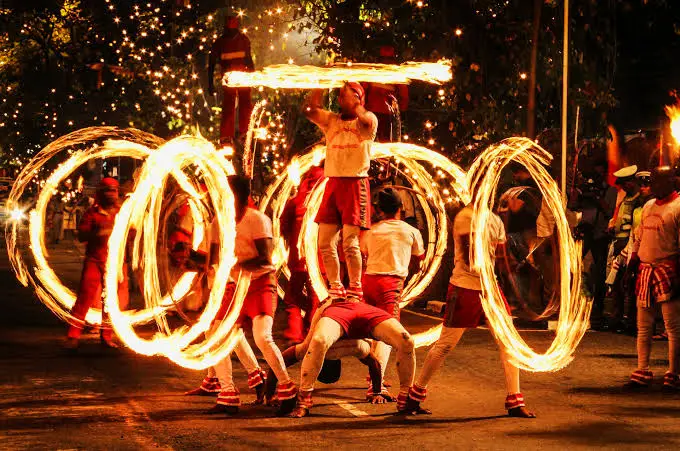
- Watch traditional Kandyan cultural dance and fire-walking, performed nightly and rooted in centuries-old ritual.
Why This Matters for Your Trip
What sets Sri Lanka apart from many ancient-ruin destinations is that its Buddhist traditions never stopped — daily rituals at the Temple of the Tooth continue exactly as they have for centuries, and July’s Esala Perahera festival still fills Kandy’s streets with elephants and drummers just as it has for generations.
Frequently Asked Questions
Q: What is the Cultural Triangle? A: A cluster of ancient capitals and heritage sites in central Sri Lanka — mainly Anuradhapura, Polonnaruwa, and Sigiriya — that formed the heart of the island’s royal and Buddhist history.
Q: How many days should I spend on cultural sites? A: Around 4–5 days covers the Cultural Triangle and Kandy without rushing between UNESCO sites.
Q: What should I wear when visiting temples? A: Modest clothing covering shoulders and knees, and shoes/socks removed before entering temple grounds.
Q: Is the Temple of the Tooth open to all visitors? A: Yes, foreign visitors are welcome; there are set daily ceremony (puja) times worth timing your visit around for the fullest experience.