Food Tours & Cooking Classes in Sri Lanka
Taste authentic Sri Lankan rice & curry, hoppers, kottu, and join village cooking classes.
Top Highlights of Food Tours & Cooking Classes
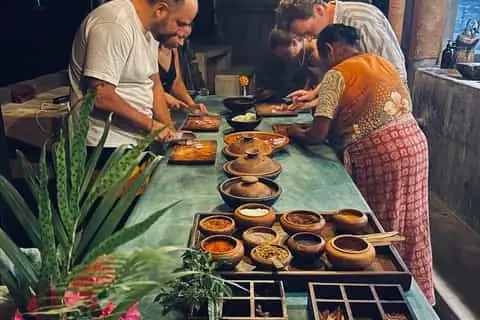
- Village clay-pot cooking class
- Colombo street food tour
- Seafood BBQ on beach
Sri Lanka Food Tours & Cooking Classes: Eating Like a Local
Sri Lankan food is built around rice and curry, coconut, and a spice blend that varies from household to household — the best way to actually understand it is a village cooking class, not just a restaurant meal.
Quick Facts
- Signature dishes: Rice and curry, hoppers (appa), kottu roti
- Cooking classes: Widely available in Kandy, Galle, Ella, and rural village settings — half-day format is most common
- Best for: Understanding regional spice differences (Jaffna’s Tamil cuisine is notably different from the south)
- What’s included: Usually a market visit, hands-on cooking, and eating the meal you made
What to Try
- Rice and curry — the everyday meal, typically several vegetable curries, a protein curry, and sambols served together.
- Hoppers (appa) — bowl-shaped fermented rice-flour pancakes, often eaten for breakfast with an egg cracked into the center.
- Kottu roti — chopped flatbread stir-fried with vegetables, egg, and meat, cooked loudly on a flat griddle — a late-night Sri Lankan staple.
Why Take a Cooking Class Instead of Just Eating Out
A village cooking class usually starts with a local market visit to pick fresh ingredients, then walks you through building a curry from scratch — grinding spices, working with coconut milk, and balancing heat and acidity the way a Sri Lankan home cook would, rather than a restaurant kitchen.
Frequently Asked Questions
Q: Are Sri Lankan cooking classes suitable for vegetarians? A: Yes — Sri Lankan cuisine has a large vegetable and lentil-curry repertoire, and most classes can accommodate vegetarian or vegan requests.
Q: How spicy is Sri Lankan food? A: It varies widely by region and household; southern coastal curries tend to be milder than northern Jaffna cuisine, which is spicier and more Tamil-influenced.
Q: How long is a typical cooking class? A: Around 3–4 hours, often including a market visit, hands-on cooking, and a shared meal at the end.
Q: What’s the difference between kottu and rice and curry? A: Rice and curry is the everyday home meal; kottu roti is a stir-fried street food dish made from chopped flatbread, popular as a quick or late-night meal.