Cost of Travel in Sri Lanka 2026: Realistic Daily Budgets
What a Sri Lanka Trip Really Costs
Sri Lanka remains one of Asia’s better-value destinations, but the gap between the cheapest and most expensive version of the same trip is unusually wide. Local food and transport cost very little; foreign-visitor entry tickets and beachfront hotels cost roughly what they would anywhere. Understanding which is which is the key to budgeting accurately.
Quick Facts
- Currency: Sri Lankan Rupee (LKR)
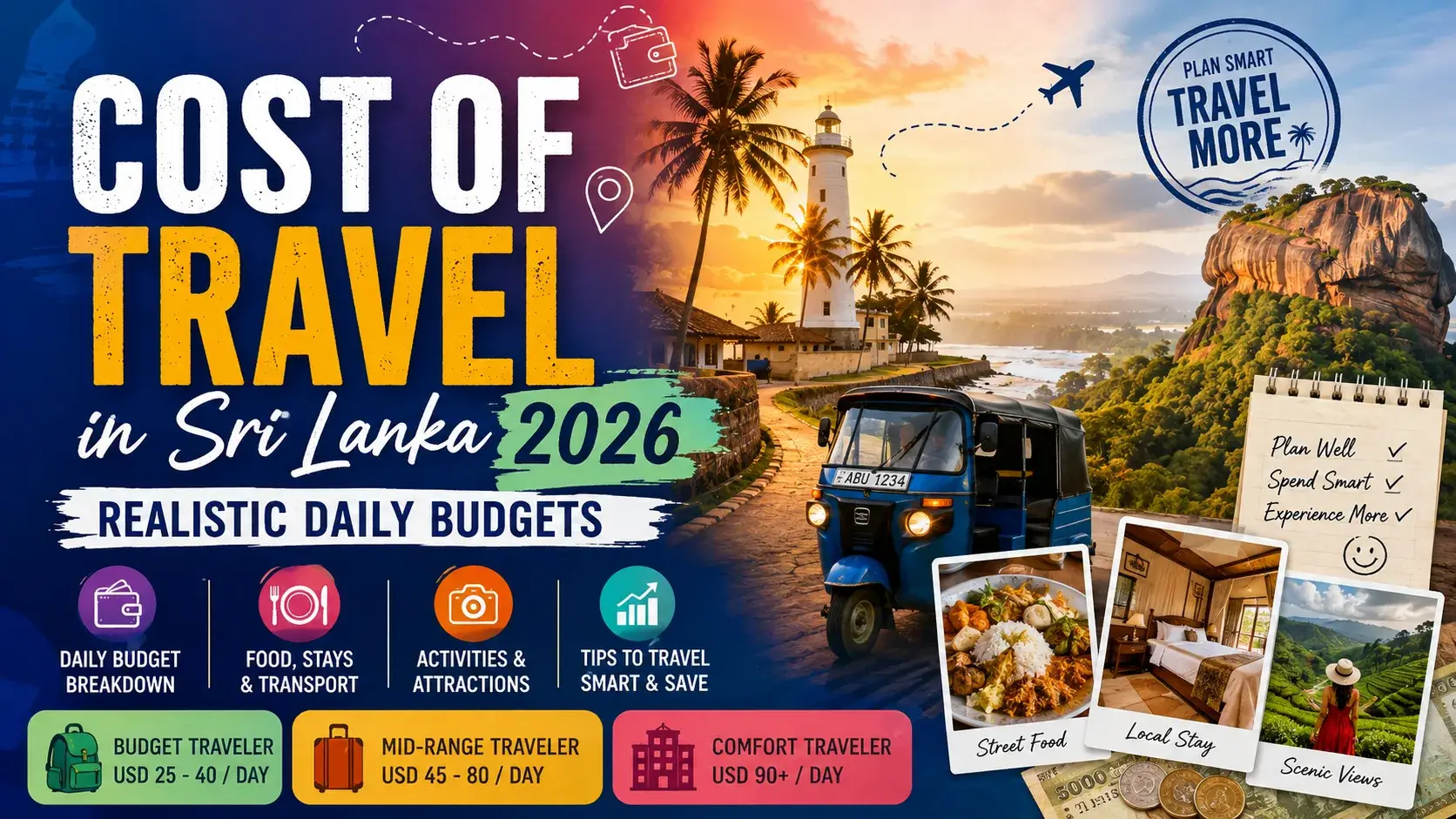
- Backpacker: $30–45 per person, per day
- Mid-range: $70–120 per person, per day
- Luxury: $250+ per person, per day
- Biggest single cost: Accommodation, then site entry tickets
- Best value: Food, local transport, and drivers
Daily Budgets by Travel Style
Backpacker — $30–45/day. Guesthouse or hostel room, meals at local rice-and-curry spots, buses and trains between regions, one or two paid attractions. Doable comfortably, and Sri Lanka’s guesthouse scene is genuinely good at this level.
Mid-range — $70–120/day. A boutique hotel or well-reviewed guesthouse, a share of a private driver, restaurant meals, and the major entry tickets. This is where most visitors land and where the country’s value is most obvious.
Luxury — $250+/day. Tea-estate bungalows, beachfront resorts, private guides at each site, and a dedicated vehicle. Sri Lanka’s top-tier properties compete with anywhere in Asia, and the price reflects that.
Accommodation
Rates vary more by season than by region. Expect roughly:
- Guesthouse / homestay: $15–30 per night
- Boutique hotel: $60–120 per night
- Tea bungalow or beach resort: $150–350 per night
- Top-tier villa or luxury lodge: $400+ per night
December–March on the south and west coasts is peak season and prices climb sharply, particularly over Christmas and New Year. The same property in May can cost half.
Food and Drink
This is where Sri Lanka is genuinely cheap.
- Local rice and curry: $2–4
- Kottu or hoppers at a street stall: $2–3
- Tourist restaurant main: $6–12
- Hotel restaurant dinner: $15–30
- Large bottled water: under $1
- Lion lager, local bar: $2–3
A note on alcohol: Sri Lanka taxes imported spirits and wine heavily, so a bottle of wine at a hotel can cost more than the meal. Local arrack and beer are far better value.
Private Driver Costs
A dedicated driver-guide with an air-conditioned vehicle is the standard way to see the country, and it is one of the better-value elements of a Sri Lanka trip. Rates are typically quoted per day and include fuel, tolls, parking, and the driver’s own accommodation and meals.
Expect roughly $65–85 per day for a car, rising for larger vans and premium vehicles. Split across two to four people, this often works out cheaper than individual transfers and taxis — and removes every logistical problem at once. Most operators include a daily mileage allowance, with a per-kilometre rate beyond it.
Entry Tickets — The Cost People Underestimate
Sri Lanka charges foreign visitors substantially more than residents at heritage sites, and these add up faster than any other line item. Sigiriya alone is one of the more expensive single tickets in South Asia, and a Cultural Triangle itinerary can easily run $100–150 per person in entry fees.
Ticket prices are set in USD and revised periodically, so confirm current rates before travel rather than budgeting from an old blog post. If cost is a concern, Pidurangala gives you the best view of Sigiriya Rock for a fraction of the price.
Costs Travellers Forget
- Visa (ETA): required before arrival for most nationalities; check current fee and eligibility on the official portal
- Safari jeep hire: $35–60 per jeep, plus park entry per person
- Tipping: customary — around $10–15 per day for a driver, 10% at restaurants where no service charge applies
- Domestic flights or seaplanes: a fast but expensive way to skip long drives
- SIM card / data: cheap, usually under $10 for a generous tourist package
Frequently Asked Questions
Q: Is Sri Lanka cheaper than Thailand or Bali? A: Food, transport, and mid-range accommodation are comparable or cheaper. Heritage site entry fees are noticeably higher, which narrows the gap on a sightseeing-heavy trip.
Q: How much cash should I carry? A: Enough for meals, tips, and small purchases — cards are widely accepted at hotels and larger restaurants but rarely at village shops, roadside stalls, or tuk-tuks.
Q: What is the best way to get rupees? A: Bank ATMs in towns, or authorised exchange counters at the airport. Rates at the airport bank counters are official and competitive.
Q: Do I need to budget for a guide at each site? A: Not usually — a good driver-guide covers most of it. Site-specific guides are worth it at Anuradhapura and Polonnaruwa, where the ruins are extensive and the context matters.
Continue Reading