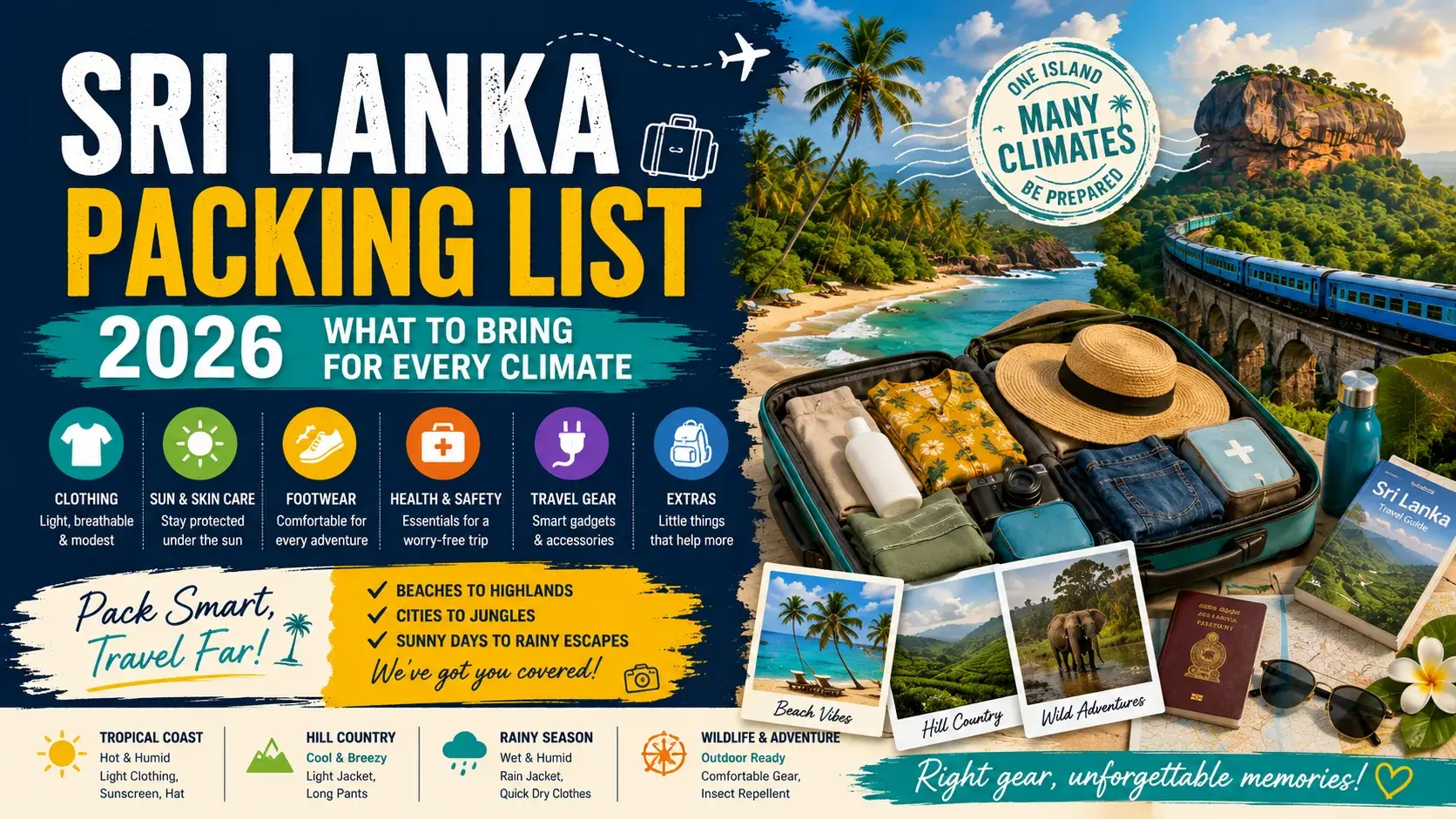
Sri Lanka Packing List 2026: What to Bring for Every Climate
What to Pack for Sri Lanka
The packing mistake almost everyone makes is treating Sri Lanka as a single tropical climate. A standard itinerary takes you from 30°C beaches to hill country where nights fall to single digits, and from open coastline to temples with a strict dress code. You need less than you think, but you need a wider range.
Quick Facts
- Coast: 28–32°C year-round, humid
- Hill country: 12–20°C by day, 5–10°C at night in Nuwara Eliya
- Temple rule: Shoulders and knees covered, shoes and hats off
- Power: 230V, Type D and G sockets — UK plugs mostly fit
- Best bag: Soft-sided, one week of clothes; laundry is cheap and fast
Clothing: The Layer You Will Forget
Pack light, breathable cotton and linen for the majority of the trip — the humidity makes synthetics unpleasant. Then add:
- One warm layer, properly warm. A fleece or light down jacket for Nuwara Eliya and Ella. Hotels in the hills often have no heating, and a 5°C night in an unheated room is genuinely cold.
- A light waterproof. Short, heavy afternoon downpours are normal even outside monsoon season. A packable rain shell beats an umbrella.
- Long, loose trousers or a long skirt. Needed for temples, useful against mosquitoes at dusk.
- A scarf or sarong. The single most useful item you can carry — temple cover-up, sun shade, beach towel, bus blanket.
Temple-Appropriate Clothing
This is not a soft guideline. At the Temple of the Sacred Tooth Relic, Dambulla, and Anuradhapura you will be turned away without:
- Shoulders covered — no vests, no strappy tops
- Knees covered — no shorts, no short skirts
- Shoes and hats removed before entering
- Feet not pointed at Buddha statues when sitting
White is the traditional colour for temple visits and always appropriate. Note that you walk barefoot on stone that has been in full sun — at Anuradhapura in the afternoon this is genuinely painful, so a pair of socks in your daypack is a small mercy.
Footwear
- Sandals you can remove quickly — you will do this many times a day
- Trainers or light hiking shoes with grip for Sigiriya, Little Adam’s Peak, and Horton Plains
- Flip-flops for the beach and guesthouse bathrooms
Sigiriya’s climb involves steep steps and open metal stairways. Do not attempt it in flip-flops.
Health and Toiletries
- High-factor sunscreen. Expensive and limited in range locally — bring it.
- Insect repellent with DEET. Dengue is present year-round; dawn and dusk are the risk windows.
- Rehydration sachets. More useful than you expect in the heat.
- Basic first aid, including anything for stomach upsets.
- Prescription medication in original packaging, with a copy of the prescription.
Sri Lanka has been certified malaria-free since 2016, so antimalarials are not standard advice — but dengue prevention very much is. Cover up at dusk and use repellent.
Safari Days
If Yala, Udawalawe, or Minneriya are on your itinerary:
- Neutral colours — greens, browns, khaki
- A hat that will stay on in an open jeep
- Binoculars if you have them; jeeps rarely carry good ones
- A zoom lens — leopards are not close
- A buff or scarf for the dust on dry-season tracks
What to Leave at Home
- Heavy toiletries. Supermarkets in Colombo, Kandy, and Galle stock the essentials.
- Too many clothes. Laundry costs a few dollars and comes back same-day at most guesthouses.
- Drone, unless pre-cleared. Drone use is regulated and requires permits; flying one at heritage sites will cause problems.
- Vaping devices. Restricted — check the current position before bringing one.
Frequently Asked Questions
Q: Can women wear shorts and bikinis in Sri Lanka? A: On the beach and at resorts, yes. Away from tourist beaches, and at every religious site, cover shoulders and knees. Topless sunbathing is not acceptable anywhere.
Q: Do I need a sleeping bag or travel sheet? A: No. Even budget guesthouses provide clean bedding.
Q: What plug adapter do I need? A: Type D and G, 230V. UK three-pin plugs fit most sockets; travellers from the US and Europe need an adapter.
Q: Is it worth bringing a water bottle? A: Yes — tap water is not safe to drink, but many hotels and guesthouses now offer filtered refills, which saves buying plastic bottles daily.
Continue Reading