Sri Lanka Cultural Etiquette & Temple Dress Code 2026
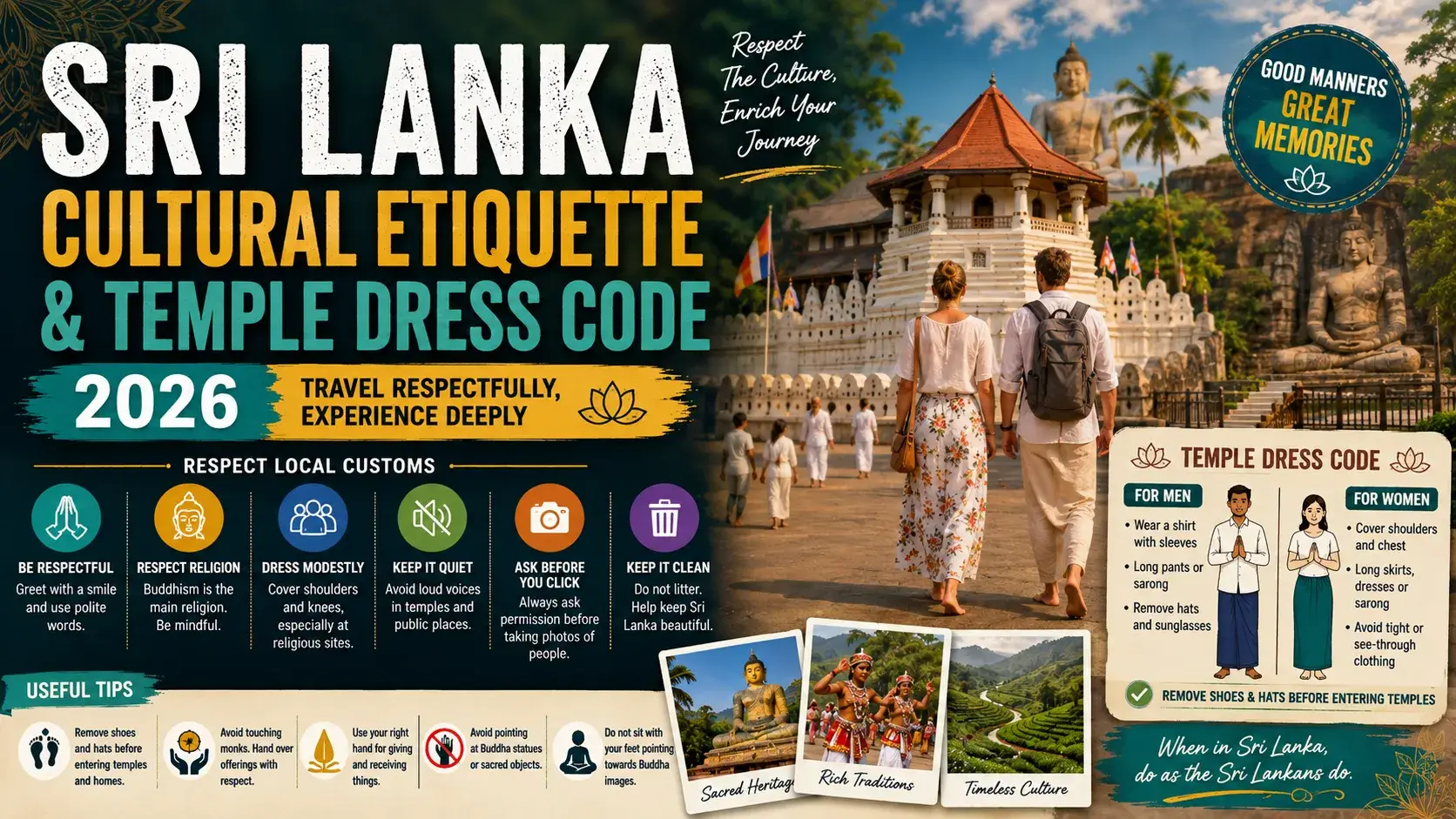
Cultural Etiquette & Temple Dress Code in Sri Lanka
Sri Lankans are famously forgiving of visitors who get things slightly wrong. There is, however, a short list of things that are not treated as innocent mistakes — particularly around Buddhist imagery — and those carry consequences up to arrest and deportation. This guide separates the courtesies from the rules.
Quick Facts
- Temple dress: Shoulders and knees covered; shoes and hats removed
- Traditional temple colour: White
- Greeting: “Ayubowan” — palms together at chest, slight bow
- Giving and receiving: Use the right hand, or both hands
- Never: Pose with your back to a Buddha statue
- Poya days: Every full moon is a public holiday; no alcohol sold
Temple Etiquette
Buddhist and Hindu sites are active places of worship, not monuments. At the Temple of the Sacred Tooth Relic, Dambulla, Anuradhapura, and every smaller temple you pass:
- Cover shoulders and knees. You will be refused entry otherwise, and the rule applies to men as well as women.
- Remove shoes and hats before entering the premises — not just the building. Leave them at the designated area; a small fee to the attendant is normal.
- Do not point your feet at a Buddha statue. When sitting, tuck your feet beneath you or to the side.
- Walk clockwise around stupas and shrines.
- Lower your voice. These are places of quiet practice.
- Do not touch statues, offerings, or bo trees.
Expect to walk barefoot on sun-heated stone. At Anuradhapura in the afternoon this is genuinely painful — carry socks.
Buddha Imagery: Where Etiquette Becomes Law
This is the section that matters most, because it is where tourists get into real trouble.
Turning your back on a Buddha statue for a photograph is a serious offence. So is climbing on statues, or posing playfully with them. Tourists have been arrested, fined, and deported for exactly this.
Buddha tattoos are a genuine problem. Visible Buddha imagery — most commonly a shoulder or forearm tattoo — has resulted in refusal of entry at immigration and deportation from within the country. If you have one, keep it covered for the entire trip. The same applies to Buddha images on T-shirts and swimwear.
Buying Buddha statues as souvenirs is legal, but exporting them requires care and larger antique pieces are restricted.
Greetings and Social Interaction
The traditional greeting is “Ayubowan” — literally “may you live long” — with palms pressed together at chest height and a slight bow. Among Tamil communities the equivalent is “Vanakkam”.
- Handshakes are common in business settings; let a woman offer her hand first.
- Use your right hand to give money, receive change, eat, or pass anything. The left hand is considered unclean.
- The head wobble — a side-to-side tilt — means yes, agreement, or acknowledgement. It is not a no.
- Public displays of affection between couples are frowned upon outside resort areas.
Monks
Monks hold a position of considerable respect and there are specific conventions:
- Stand when a monk enters, and sit only after they have.
- Women should not touch monks or hand items directly to them — place the item down for the monk to pick up.
- Ask before photographing. Most agree readily.
- On buses and trains, the front seats are reserved for monks.
Dining Customs
- Eating with the right hand is traditional and completely normal; cutlery is always available.
- Wait to be shown where to sit as a guest in a home.
- Refusing food outright can cause offence — accepting a small amount is the graceful way out.
- Removing shoes before entering a home is expected.
Dress Outside Temples
Beachwear belongs on the beach. In towns, villages, and on public transport, covered shoulders and knees are appropriate and will change how you are treated. Topless sunbathing is not acceptable anywhere, including tourist beaches. Nudity is illegal.
Poya Days
Every full moon is a Poya day — a Buddhist public holiday. Alcohol sales stop across the country, meat may be off menus, many businesses close, and temples are far busier than usual. Hotels can sometimes serve registered guests, but do not count on it. Check the Poya calendar against your dates.
Frequently Asked Questions
Q: Will I really be refused entry over a Buddha tattoo? A: It has happened repeatedly and is well documented. Cover it — it is not worth the risk of being turned around at the airport.
Q: Can I take photos inside temples? A: Generally yes, with the critical exception of posing with your back to a Buddha. Some inner shrine rooms prohibit photography entirely; watch for signs and follow what locals do.
Q: Do men need to cover up too? A: Yes. Shorts and vests will get a man turned away from a temple just as quickly.
Q: Is it rude to refuse an invitation to a home? A: Not rude, but hospitality matters here. If you can accept even briefly, it is appreciated.
Q: What should I wear to a temple if I have not packed for it? A: Sarongs and wraps are sold outside every major site for a small amount, and many temples lend cover-ups at the entrance.
Continue Reading